Last updated: November 2026 · Part 4 of my Jeju series
Here’s a secret about Jeju: half the people on your flight aren’t there for the beaches. They’re there to eat. Black pork grilled over charcoal, noodle soup topped with slabs of pork, abalone porridge, hairtail fish braised in chili sauce, and tangerines so sweet they ruin supermarket oranges for life.
Jeju food is its own thing: island cooking shaped by the sea, volcanic soil, and a history of making a lot out of very little. Here’s what to eat, roughly what it costs, and how to order it. Planning the rest of the trip? Start with Part 1: Jeju travel guide.

⚡ TL;DR: Must-eats: black pork BBQ (heukdwaeji), gogi-guksu (pork noodle soup), jeonbok-juk (abalone porridge), galchi jorim (braised hairtail), raw fish and mulhoe (cold raw fish soup), and tangerines in every shape and form. Go to Dongmun Market in Jeju City or Seogwipo Olle Market for snacks. Jeju is pricier than Seoul for the famous stuff, so mix in noodle and market meals.
Jeju food at a glance
| Dish | What it is | Rough price (2026) |
|---|---|---|
| Heukdwaeji (black pork) | Jeju’s famous black pig, grilled at your table | ~₩25,000–35,000 per serving |
| Gogi-guksu | Noodle soup with thick slices of pork | ~₩10,000–12,000 |
| Jeonbok-juk | Abalone rice porridge, green from the innards | ~₩13,000–20,000 |
| Galchi jorim / galchi-guk | Hairtail braised in chili sauce, or in a clear pumpkin soup | ~₩20,000–40,000+ per person for big platters |
| Mulhoe | Cold raw fish soup, a summer favorite | ~₩12,000–15,000 |
| Okdom-gui | Grilled red tilefish, Jeju’s “royal” fish | Market price, often pricey |
| Momguk | Pork broth soup with gulfweed seaweed | ~₩10,000 |
| Bingtteok | Thin buckwheat crepe rolled around radish | A few thousand won |
Prices are rough ranges as of late 2026 and vary a lot by area and restaurant. Tourist hotspots charge more.
1. Black pork (heukdwaeji)
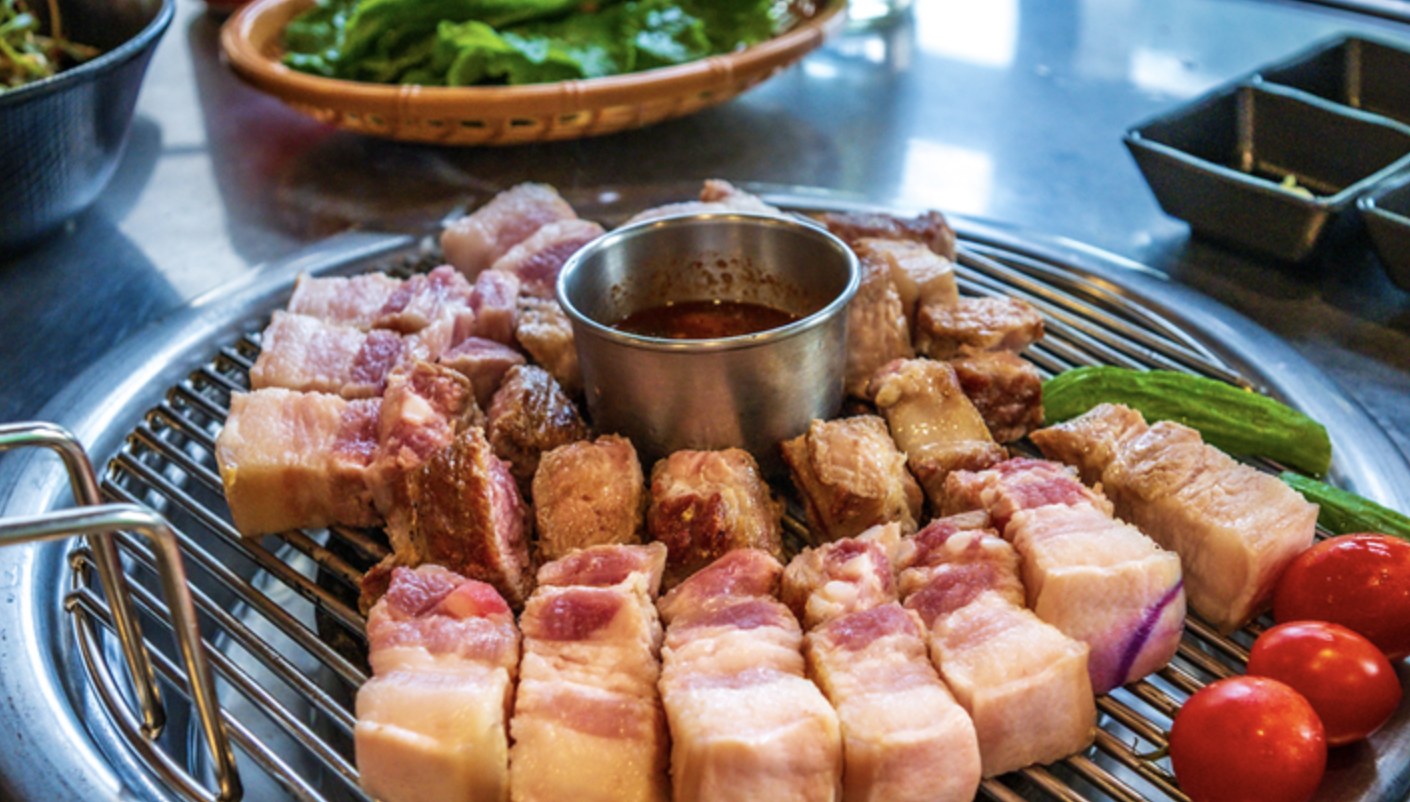
The king of Jeju food. Jeju’s native black pig has firmer meat and a thicker layer of fat with chewy skin. It’s usually served as ogyeopsal (belly with skin) or moksal (neck), cut very thick and grilled over charcoal.
- The Jeju way: dip it in myeolchijeot, salted anchovy sauce bubbling in a little tin on the grill.
- Staff often grill it for you because the thick cuts take skill.
- Most places require at least 2 servings, and Jeju black pork costs noticeably more than mainland pork.
- Never done Korean BBQ? Read my samgyeopsal and soju guide first.
🤫 Friend tip: Jeju City has a whole “black pork street.” But honestly, the neighborhood places near where you’re staying are often just as good and less crowded.


2. Gogi-guksu (pork noodle soup)
Jeju’s comfort food. Thick wheat noodles in a rich, milky pork bone broth, topped with generous slices of boiled pork, scallions and chili flakes. It’s cheap, filling and perfect after a long hike or a windy day on the coast. Some places also offer bibim-guksu, a spicy mixed version.


🔥 Hot take: Gogi-guksu for breakfast is the right call. Sunrise at Seongsan, a bowl of noodles, back in bed by 9am. Elite day.
3. Seafood: abalone, hairtail and friends
Jeonbok-juk (abalone porridge)
Rice porridge cooked with abalone and its innards, which turn it a pale green. Rich, savory and comforting. Many places also serve jeonbok-ttukbaegi (abalone and seafood in a hot stone pot) and grilled abalone.


Galchi (hairtail)
Jeju’s silver hairtail is famous. Try it as galchi jorim (braised in a spicy sauce with radish), galchi-gui (pan-grilled), or the very Jeju galchi-guk, a clear, slightly sweet soup with pumpkin and greens. Whole-fish platters for groups are a splurge.


Raw fish and mulhoe
Hoe (sliced raw fish) is everywhere on the coast. In summer, locals eat mulhoe: raw fish or squid in an ice-cold, tangy broth with vegetables. The Jeju favorite is jaritdom mulhoe, made with small damselfish, bones and all.
Haenyeo seafood
Jeju’s haenyeo, women free-divers (on UNESCO’s Intangible Heritage list), harvest abalone, sea urchin, conch and octopus by hand. In some coastal villages you can eat what they caught that morning at small seafood shacks, often run by the divers themselves. Ask locals or look for a village haenyeo house (해녀의 집).


🙅 Skip: ordering a giant hairtail platter for two on day one.
👉 Do this instead: start with gogi-guksu and abalone porridge to calibrate your budget, then go big for one special dinner.
4. Tangerines (and everything made from them)
Jeju grows almost all of Korea’s citrus. From roughly November to February you’ll see roadside stands, orchards and boxes of tangerines everywhere.
| Variety | Korean | What’s special |
|---|---|---|
| Gamgyul | 감귤 | Classic small tangerine. Peak season Nov–Jan |
| Hallabong | 한라봉 | Big, bumpy top “knob,” very sweet. Winter to spring |
| Cheonhyehyang | 천혜향 | Juicy, fragrant, thin skin |
| Redhyang | 레드향 | Deep orange, extra sweet |
- Try tangerine picking at a farm in season. Many charge a small fee and let you take a bag home.
- Tangerine juice, chocolate, makgeolli, ice cream: everything comes in tangerine flavor here.
- Flying out? Boxes of tangerines are the classic Jeju souvenir (check your airline and destination rules for fresh fruit).


5. Local snacks and drinks
- Bingtteok: a thin buckwheat crepe rolled around seasoned radish. Simple, old-school Jeju.
- Omegi-tteok: chewy millet rice cakes coated in red beans or nuts. The famous market snack.
- Momguk: thick pork broth with gulfweed (a type of seaweed). Very local, very hearty.
- Jeju makgeolli: local rice wine. Light and fizzy, great with pajeon.
- Peanut ice cream on Udo island. Practically mandatory.
- Green tea desserts near the tea fields on the west side.
Where to eat: markets
| Market | Where | Why go |
|---|---|---|
| Dongmun Market | Jeju City | Jeju’s biggest traditional market. Fish, tangerines, snacks, plus a night market with food stalls |
| Seogwipo Maeil Olle Market | Seogwipo | Covered market for street food, omegi-tteok and fresh seafood. Easy stop on the Olle 6–7 courses |
| 5-day markets | Several towns | Rotating local markets every 5 days. Very local, very fun |


🤫 Friend tip: Markets are the budget hack in Jeju. Grab sashimi packs, fried snacks and tangerines, then have a picnic on the beach.
Eating tips for Jeju
- Prices are higher than in Seoul for famous dishes, especially in tourist areas. Noodles and market food keep costs down.
- Many restaurants close early outside Jeju City and Seogwipo, and some close one day a week. Check before driving out.
- Lines at famous spots can be long. Go at opening time or late lunch (around 2–3pm).
- Card payments are widely accepted; carry a little cash for markets and stands.
- Driving? Remember Korea’s strict drink-driving laws. Leave the makgeolli for when you’re done for the day.
FAQ
What food is Jeju famous for?
Black pork BBQ, gogi-guksu (pork noodle soup), abalone porridge, hairtail fish, raw fish and mulhoe, and tangerines like hallabong.
Why is Jeju black pork special?
It comes from Jeju’s native black pig breed, with firmer meat and a thick, chewy skin layer. It’s served thick-cut and dipped in salted anchovy sauce, Jeju style.
How much does food cost in Jeju?
Noodle soups and porridge run about ₩10,000–20,000, black pork about ₩25,000–35,000 per serving, and big seafood platters much more. Markets are the cheapest option.
When is tangerine season in Jeju?
Roughly November to February for classic tangerines, with hallabong and other varieties running into spring.
Black pork or gogi-guksu, what would be your first meal in Jeju? Tell me in the comments. Last up in the series: Part 5, beaches, cafés and rainy days.
Prices are approximate as of late 2026 and vary by restaurant and season.
Leave a Reply