Last updated: November 2026 · Part 3 of my Jeju series
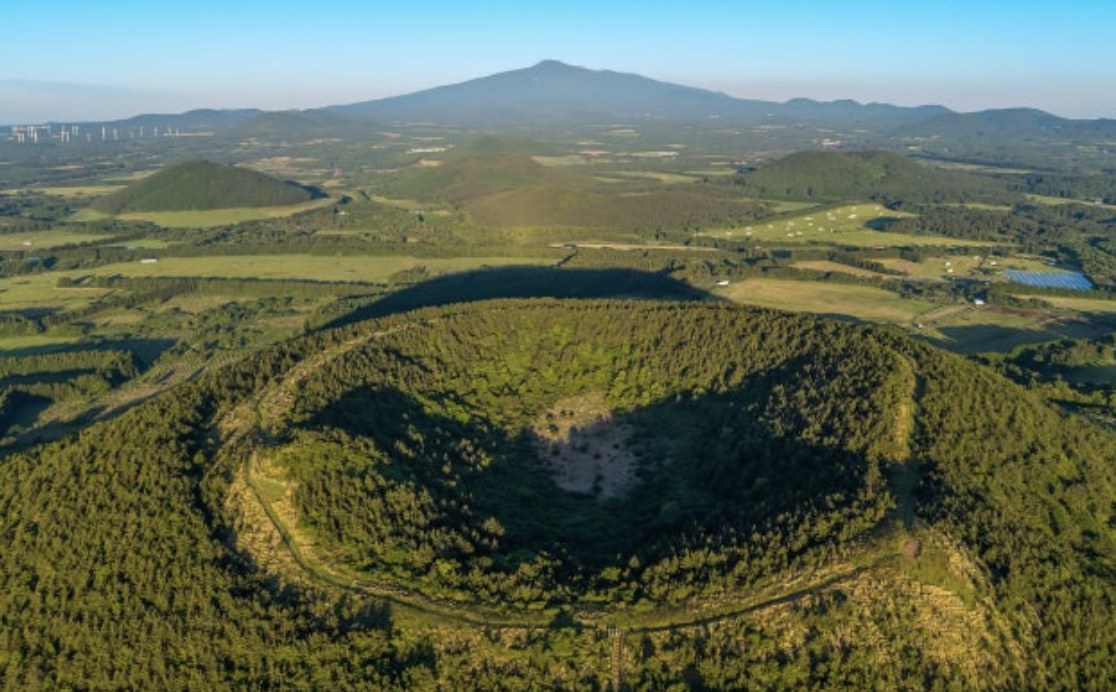
Hallasan gets all the attention, but Jeju’s secret weapon is the oreum: about 360 small volcanic cones scattered across the island like someone spilled a bag of giant green marbles. Most take 15–40 minutes to climb. The views are ridiculous. And then there’s the Jeju Olle, a walking trail that loops all the way around the island, through fishing villages, tangerine farms and lava-rock coastline.
This is your guide to both: the best oreum for sunrise, sunset and silver grass, plus the Olle courses worth your legs. Haven’t planned the big picture yet? Start with Part 1: Jeju travel guide, or go big with Part 2: Hallasan.

⚡ TL;DR: An oreum (오름) is a small volcanic cone, and Jeju has around 360. Don’t miss Seongsan Ilchulbong for sunrise (₩5,000, ~25 min up), Saebyeol Oreum for sunset and autumn silver grass, and Darangshi Oreum for the best crater view in the east. Geomun Oreum needs a reservation. For the Olle trail, pick one course: Course 7 (Seogwipo sea cliffs) or Course 10 (Sanbangsan to Songaksan) are perfect first walks.
What is an oreum?
Oreum is Jeju dialect for a small mountain, and almost all of them are parasitic volcanoes: little cones that formed on the flanks of Hallasan. Many have a crater on top, some have grassy slopes that turn silver in autumn, and nearly all have a 360° view of fields, other oreum, the sea and, on clear days, Hallasan.
- How many? Around 360, the highest density of volcanic cones of this kind anywhere.
- How hard? Mostly easy: 15–40 minutes up on stairs or dirt paths. Sneakers are fine for most.
- When? Sunrise and sunset are magic. Autumn (Oct–Nov) brings silver grass (eoksae). Spring is green and windy.
- Cost? Most are free. Seongsan Ilchulbong and Geomun Oreum charge a small fee.


The best oreum to climb
| Oreum | Area | Time up | Why go |
|---|---|---|---|
| Seongsan Ilchulbong | East | ~25 min | Sunrise peak, UNESCO site, huge crater |
| Darangshi Oreum | East | ~30 min | “Queen of oreum,” perfect crater, views of dozens of oreum |
| Yongnuni Oreum | East | ~30 min | Soft, rolling triple crater; photographers’ favorite |
| Saebyeol Oreum | West | ~20 min | Sunset and autumn silver grass; home of the Fire Festival |
| Geomun Oreum | Northeast | ~2–3 hrs (guided) | UNESCO lava-tube origin, forest crater; reservation needed |
| Sarabong | Jeju City | ~20 min | Sunset over the harbor, easy from downtown |
Seongsan Ilchulbong: the sunrise peak
The one everyone knows. A tuff cone that erupted out of the sea about 5,000 years ago, with a near-perfect bowl-shaped crater on top. It’s a UNESCO World Natural Heritage site. The climb is about 25 minutes on stairs, steep but short. At the top, the crater spreads out below you and the sea is on three sides.
| Details | |
|---|---|
| Admission | Adults ₩5,000, youth/children ₩2,500 |
| Hours | Nov–Feb 6:00–18:00 · Mar–Apr, Sep–Oct 5:00–19:00 · May–Aug 4:30–20:00 (last ticket 1 hr before close) |
| Closed | First Monday of each month |
| Height | 180 m |

🤫 Friend tip: For sunrise, arrive about 40–50 minutes before sunrise and start climbing in the dark with a phone flashlight. On New Year’s Day there’s a huge sunrise festival here, and it gets packed.
Darangshi Oreum: the queen
If Seongsan is the celebrity, Darangshi is the local legend. It’s steeper (zigzag stairs, about 30 minutes), but the reward is a perfectly round, deep crater and a panorama of the eastern oreum fields with Seongsan and Udo on the horizon. Most tourists skip it, which is exactly why you shouldn’t.
Yongnuni Oreum
Gentle grassy curves, three craters and soft light at golden hour. Photographers love it. It was closed for a few years for a “rest period” to let the vegetation recover, so check that it’s open before you go, and stay on the marked path.


Saebyeol Oreum: sunset and silver grass
On the west side, near the main road to Aewol and Hyeopjae. A short, steep climb up a grassy slope (about 20 minutes) with sweeping sunset views. In October and November, the whole hill turns silver with swaying eoksae grass, one of the most photographed scenes in Jeju.
It’s also home to the Jeju Fire Festival in March. The old tradition of setting the whole hillside on fire has ended for wildfire safety; the festival now uses a digital “fire” light show across the slope, plus torch parades and concerts.


Geomun Oreum: the UNESCO one
Lava from Geomun Oreum created the famous lava tube caves of northeastern Jeju, which is why it’s part of the UNESCO World Natural Heritage site. The trail goes around and into a forested crater full of ferns and old lava features. Visits are by reservation through the Jeju World Natural Heritage Center, in timed groups (roughly 9am–2pm), and it’s closed on Tuesdays. Small fee (adults ₩2,000).
🙅 Skip: trying to do six oreum in one day.
👉 Do this instead: pick one for sunrise, one for sunset and spend the middle of the day at the beach or a café. Oreum are about the moment, not the checklist.
Oreum etiquette
- Stay on the path. Oreum are fragile, and some close for years to recover from erosion.
- Some oreum are on private land or used for cattle grazing. Respect signs and fences.
- Wind is real. Hold your hat and phone. Avoid the very top in strong wind.
- No drones without permission near Seongsan and other protected areas.
The Jeju Olle trail
Jeju Olle (제주올레) is a long-distance walking trail of about 27 courses and roughly 437 km, looping around the whole island plus side courses on Udo, Gapado and Chujado. “Olle” means the narrow path from the street to your front door in Jeju dialect, and that’s the spirit: slow, local, through villages, farms and coastline. It started in 2007 and inspired walking trails all over Korea and Asia.

How to follow the Olle
- Look for blue and orange ribbons tied to trees and poles.
- Arrows painted on walls: blue = forward (the official direction), orange = backward.
- The ganse, a little wooden pony marker, points its head in the forward direction.
- Each course is about 10–20 km and takes 4–6 hours. You can do just part of one.
- Collect stamps at the start, middle and end in an Olle passport (about ₩20,000, paper or mobile) if you want to track your courses.
Best Olle courses for first-timers
| Course | Route | Distance | Why |
|---|---|---|---|
| 7 | Seogwipo coast, westward | ~17 km | The classic: sea cliffs, Oedolgae rock, dramatic coastline. Do the first half if short on time |
| 10 | Hwasun → Mosulpo | ~15.6 km | Sanbangsan, Yongmeori coast and Songaksan ridges. “Short, easy, beautiful” |
| 1-1 | Udo island loop | ~13 km | A whole island on foot: white beaches, cliffs, peanut ice cream |
| 10-1 | Gapado island | ~5 km | Tiny flat island, barley fields in spring, easy and quiet |
| 1 | Siheung → Gwangchigi | ~15 km | Two oreum and Seongsan views. Where it all started |


🔥 Hot take: You don’t have to “complete” an Olle course. Walk 2 hours of Course 7 from Seogwipo, find a café, take the bus back. That’s the best afternoon in Jeju.
Olle tips
- Courses are one-way: start early and plan a bus or taxi back from the end point.
- Bring water and snacks. Some stretches have no shops for hours.
- Wear real walking shoes. Lava rock is sharp and uneven.
- Routes change sometimes (detours for construction or erosion). Check the Jeju Olle website or app before you go.
- Don’t walk alone in remote stretches at dusk; let someone know your plan.
A sample oreum + Olle day
| Time | Plan |
|---|---|
| Sunrise | Seongsan Ilchulbong (or Darangshi for fewer people) |
| Morning | Breakfast in Seongsan, then ferry to Udo and walk part of Course 1-1 |
| Afternoon | Back on the mainland, beach and café time in Woljeong-ri or Hamdeok |
| Sunset | Drive west to Saebyeol Oreum (about an hour), or catch sunset at Sarabong in Jeju City |

FAQ
What is an oreum in Jeju?
An oreum is a small volcanic cone, a “mini mountain” formed by eruptions on the flanks of Hallasan. Jeju has about 360 of them, and most take under 40 minutes to climb.
Which oreum is best for sunrise?
Seongsan Ilchulbong is the classic, and it opens early for sunrise. Darangshi Oreum and Yongnuni Oreum are quieter options in the east.
How much is Seongsan Ilchulbong?
Adults pay ₩5,000. It opens as early as 4:30am in summer and is closed on the first Monday of each month.
How long is the Jeju Olle trail?
About 437 km in roughly 27 courses, including side courses on small islands. Each course is 10–20 km, but you can walk just a section.
Which Olle course is the best?
For first-timers, Course 7 (Seogwipo sea cliffs) and Course 10 (Sanbangsan to Songaksan) are the most popular. Course 1-1 on Udo is great if you want an island day.
Sunrise oreum or sunset oreum, which team are you? Tell me in the comments. Next up: Part 4, what to eat in Jeju.
Opening hours, fees and trail routes change. Check official sources before you go.
👋 Written by Brian. A Seoul-based physician who performs aesthetic skin treatments, and a Seoul local for 30+ years. I’ve traveled much of Korea, spent two months living in Jeju, cook at home a lot and will happily cross the city for one good bowl of noodles. More about me →
Leave a Reply