Last updated: November 2026
⚡ TL;DR: Jeonju is Korea’s food capital and home to the country’s biggest traditional village: 700+ hanok houses in one walkable neighborhood. It’s about 1.5–2 hours from Seoul by KTX. Must-dos: Gyeonggijeon Shrine, Jeondong Cathedral, the view from Omokdae, real Jeonju bibimbap, kongnamul gukbap for breakfast and the Nambu Night Market (Fridays and Saturdays). One night is perfect.
Ask any Korean where the best food in the country is, and most will say the same thing: Jeolla Province, and especially Jeonju. Order a simple meal here and the table fills with side dishes before you’ve even picked up your chopsticks.
Add a whole neighborhood of curved tile roofs, quiet alleys and centuries-old landmarks, and you get one of the most relaxing trips you can make from Seoul. I go back whenever I need to slow down and eat well. Here’s how I’d spend a night there.

Getting there
- KTX from Yongsan Station (or Seoul/Suseo with some routes) to Jeonju Station: about 1.5–2 hours
- From Jeonju Station, a taxi or city bus to the Hanok Village takes about 20–25 minutes
- Express bus from Seoul Express Bus Terminal is another option, about 2.5–3 hours
- Once you’re there, everything in the Hanok Village is walkable
What to see in Jeonju Hanok Village
Gyeonggijeon Shrine
A peaceful walled shrine built in 1410 to hold the portrait of Taejo, the founder of the Joseon dynasty. Inside are bamboo groves, old trees and a portrait museum. Admission is ₩3,000 for adults, and it’s open every day (9:00–18:00 from November to February).

Jeondong Cathedral
A red-brick Romanesque cathedral facing Gyeonggijeon, built on the site where Korea’s first Catholic martyrs died. The contrast between the cathedral and the hanok rooftops around it is one of the most photographed views in Jeonju. Please be quiet inside; it’s an active church.

Omokdae viewpoint
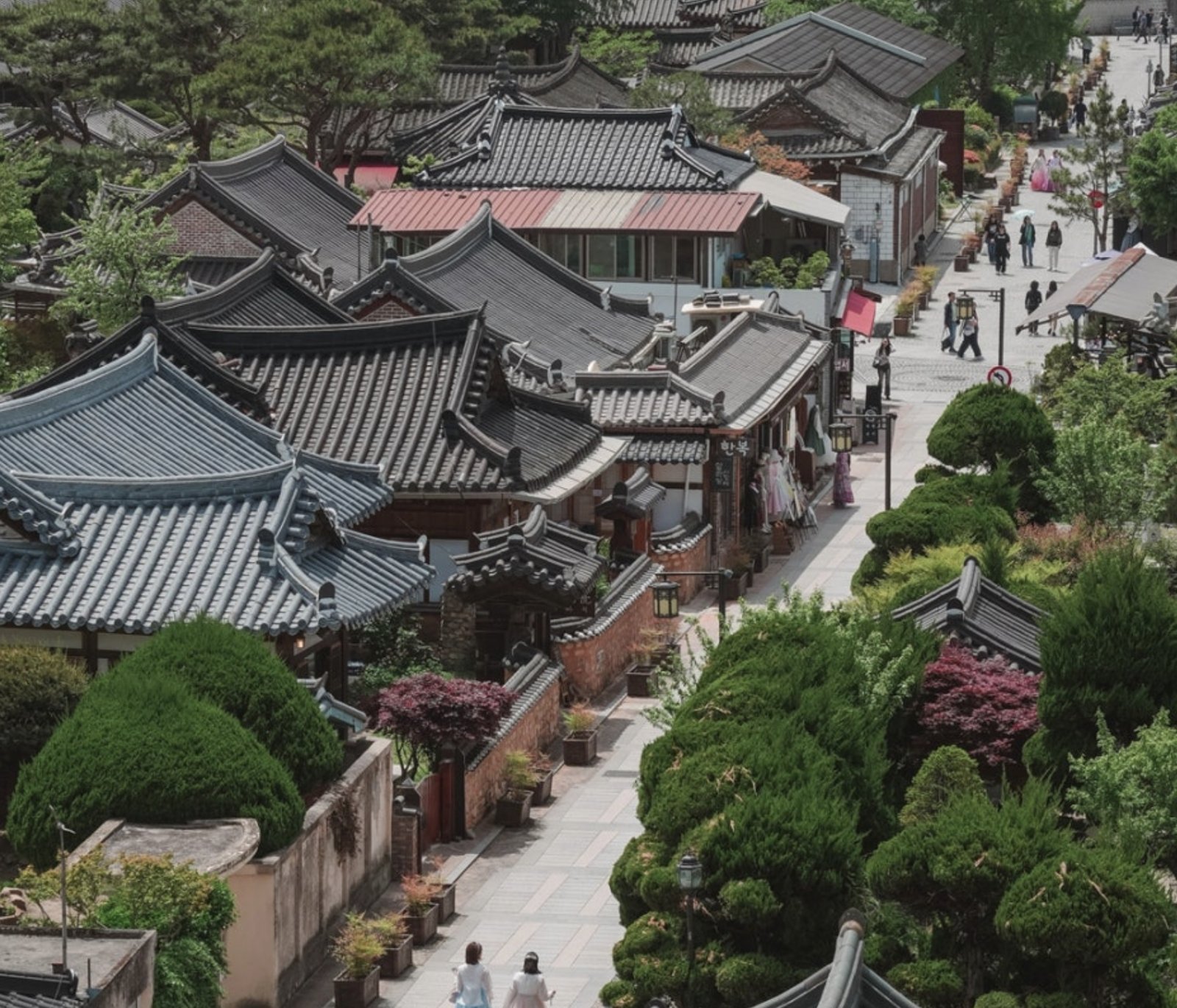
A short climb up the hill on the east side of the village gives you the classic view: a sea of black tile roofs. Come in the late afternoon when the light turns gold.


Jaman Mural Village
A hillside neighborhood across the road, covered in colorful murals, with small cafes and views back over the village.
Hanbok, tea and slow alleys
Renting a hanbok for a few hours is part of the fun here, and the side alleys are full of tea houses and craft shops. Walk away from the main street and the crowds disappear fast.


🔥 Hot take: The main street of the Hanok Village is the least interesting part. Turn into any side alley and you’ll find the quiet, lived-in Jeonju that makes the trip worth it.
What to eat in Jeonju
| Dish | What it is | When to eat it |
|---|---|---|
| Jeonju bibimbap | Rice cooked in beef broth, topped with seasoned vegetables, beef tartare and a raw egg yolk, served in a brass bowl | Lunch |
| Kongnamul gukbap | Soybean sprout rice soup, often with a soft-boiled egg on the side; Jeonju’s famous hangover breakfast | Breakfast |
| Makgeolli set | Order a kettle of rice wine and the table fills with side dishes that keep coming with each round | Evening |
| Night market snacks | Skewers, dumplings, fusion street food at the Nambu Night Market | Fri–Sat evenings |
| Jeonju choco pie | Hand-made chocolate pies with jam, the classic Jeonju souvenir | Anytime |
Want to cook it at home? Try my bibimbap recipe.


Nambu Market and the night market
Next to the Hanok Village, Nambu Market is a traditional market where locals shop by day. On Friday and Saturday evenings (about 5–11 PM), its central lane turns into the Nambu Night Market, packed with food stalls. Upstairs, the Youth Mall has small cafes and shops run by young owners. Go early; popular stalls sell out.


A simple 1-night plan
| Day 1 | Day 2 | |
|---|---|---|
| Morning | KTX from Seoul, drop bags at your hanok stay | Kongnamul gukbap breakfast |
| Afternoon | Bibimbap lunch, Gyeonggijeon, Jeondong Cathedral, hanbok walk | Jaman Mural Village, cafes, souvenir shopping |
| Evening | Omokdae at sunset, Nambu Night Market (Fri–Sat) or a makgeolli dinner | KTX back to Seoul |
💡 Friend tip: Stay one night in a hanok guesthouse. Sleeping on a warm ondol floor is half the experience; just keep a damp towel by your bed, because heated floors dry out your skin fast. More on that in my dry skin guide.

When to go
- Spring: mild weather, and the Jeonju International Film Festival usually takes place in late April or early May
- Autumn: the best weather for walking, with fall colors on the hills
- Winter: quiet, cozy hanok nights and fewer crowds
- Weekends: busy but lively; weekdays are calmer, but the night market is weekends only
🙅 Skip: trying to do Jeonju as a rushed day trip, eating only on the main street, and walking into private hanok homes. Many houses in the village are still lived in.
If you have more time
- Combine with Gyeongju for a history-and-food trip through Korea’s old capitals
- More traditional stays in my templestay guide
- Back in Seoul, explore temples and Namdaemun Market
FAQ
How do I get from Seoul to Jeonju?
Take the KTX from Yongsan Station to Jeonju Station, which takes about 1.5 to 2 hours, then a taxi or bus to the Hanok Village in about 20 to 25 minutes. Express buses from Seoul take about 2.5 to 3 hours.
Is Jeonju worth a day trip?
You can do it in a day, but one night is much better. You’ll have time for the night market, a hanok stay and Jeonju’s famous breakfast, kongnamul gukbap.
What food is Jeonju famous for?
Jeonju bibimbap, kongnamul gukbap (soybean sprout soup), makgeolli with endless side dishes, and hand-made choco pies as a souvenir.
When is the Nambu Night Market open?
The Nambu Night Market runs on Friday and Saturday evenings, roughly 5 PM to 11 PM. Popular stalls can sell out early.
What would you eat first in Jeonju? Tell me in the comments.
👋 Written by Brian. A Seoul-based physician who performs aesthetic skin treatments, and a Seoul local for 30+ years. I’ve traveled much of Korea, spent two months living in Jeju, cook at home a lot and will happily cross the city for one good bowl of noodles. More about me →
Leave a Reply